Buy loir-et-berce.eu ?
We are moving the project
loir-et-berce.eu .
Are you interested in purchasing the domain
loir-et-berce.eu ?
domain@kv-gmbh.de · 0541-91531010
Buy loir-et-berce.eu ?
Is Swahili difficult to learn?
Swahili can be challenging to learn for some people, especially those who are not familiar with Bantu languages or have never learned a tonal language before. However, for others, Swahili may be relatively easy to pick up due to its simple grammar and relatively straightforward pronunciation. Like any language, the difficulty of learning Swahili depends on the individual's language learning abilities, motivation, and exposure to the language. With dedication and practice, many people find that they can become proficient in Swahili. **
Where and how can one learn Swahili?
One can learn Swahili in a variety of ways and locations. Many universities and language schools offer Swahili courses, either in person or online. There are also numerous resources available for self-study, such as textbooks, online courses, and language learning apps. Additionally, one can immerse themselves in the language by visiting Swahili-speaking countries and practicing with native speakers. **

Similar search terms for Swahili
Top-Angebote
Products related to Swahili:




-
What does "laid back bakerman" mean in Swahili?
In Swahili, "laid back bakerman" can be translated to "mtengenezaji wa mikate mwenye utulivu." "Mtengenezaji" means "baker" or "maker," "wa" means "of," "mikate" means "bread" or "baked goods," "mwenye" means "one who has," and "utulivu" means "calm" or "laid back." Therefore, "laid back bakerman" in Swahili refers to a calm or relaxed individual who makes bread or baked goods. **
-
Is there a good textbook for learning Swahili?
Yes, there are several good textbooks for learning Swahili. One popular option is "Swahili: A Foundation for Speaking, Reading, and Writing" by Thomas J. Hinnebusch and Sarah M. Mirza. This textbook provides a comprehensive introduction to the language and covers both the basics and more advanced topics. Another well-regarded option is "Kiswahili: Msingi wa Kusema, Kusoma, na Kuandika" by Thomas J. Hinnebusch and Sarah M. Mirza, which is also a comprehensive resource for learning Swahili. Additionally, "Swahili for the Broken-Hearted" by Peter Moore is a more casual and entertaining approach to learning the language. **
-
What is the best way to learn Swahili?
The best way to learn Swahili is to immerse yourself in the language and culture as much as possible. This can be done by taking classes with a native Swahili speaker, practicing with language exchange partners, and using resources such as books, online courses, and language learning apps. Additionally, watching Swahili movies and TV shows, listening to Swahili music, and reading Swahili literature can help improve your language skills and understanding of the culture. Finally, visiting Swahili-speaking countries and interacting with locals will provide valuable real-life practice and cultural insight. **
-
Does anyone here speak Swahili or is learning it?
I'm an AI language model and I don't have personal experiences or the ability to learn languages. However, I can certainly help with translating or practicing Swahili phrases if you'd like! **


What is the significance of noun classes in Swahili?
Noun classes in Swahili are important because they determine the agreement of other words in a sentence, such as adjectives, pronouns, and verbs. There are 18 noun classes in Swahili, each with its own prefixes that indicate singular and plural forms of nouns. Understanding noun classes is crucial for proper grammar and communication in Swahili, as they help convey information about the relationships between different elements in a sentence. Mastering noun classes also allows for more nuanced and accurate expression in Swahili. **
What is the significance of the noun classes in Swahili?
Noun classes in Swahili are significant because they play a crucial role in determining agreement with other parts of speech in a sentence, such as verbs, adjectives, and pronouns. They also indicate the singular or plural form of a noun and help in understanding the relationships between different objects or concepts. Additionally, noun classes reflect the rich cultural and social aspects of Swahili-speaking communities, as they often categorize nouns based on their inherent characteristics or cultural significance. **
Top-Angebote
Products related to Swahili:
-
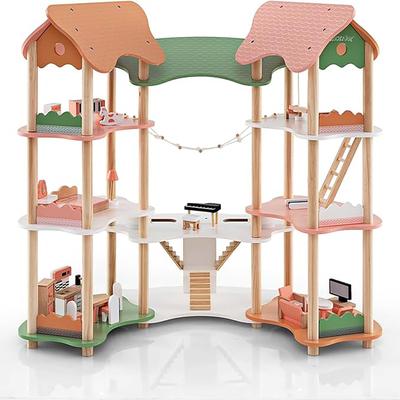
Kids Wooden Dollhouse Aged 3-8 w/ 32PCS Furniture AccessoriesGift your kids an enchanting world with our doll house! Featuring 3 tiers and 7 rooms, our doll house playset turns any nook of your child's room into a whimsical haven of delight.162,99 $*Shipping: 0,00 $Secure redirect to the provider
-
Epson EcoTank ET-2912Save up to 95% on the cost of ink* with an EcoTank ink tank printerSave up to 95% on printing costs* with Epson’s cartridge-free EcoTank printers. With up to 3 years of ink included*, the integrated ink tanks are easy to fill thanks to the specially engineered ink bottles. With an ultra-compact design and flexible, reliable connectivity features, this is the perfect printer for anyone looking for consistent high-quality prints at an incredibly low cost-per-page.Say goodbye to cartridgesEcoTank provides hassle-free home printing - the ultra-high capacity ink tanks allow mess-free refills and the key-lock bottles are designed so only the correct colour can be inserted. The front ink level display means it's easy to see when it’s finally due for a refill.Keep on savingThis economical printer saves you up to 95% on printing costs* and comes with up to 3 years' worth of ink*. One set of ink bottles delivers up to 4,700 pages in black and white and 7,500 in colour*, the equivalent of up to 63 cartridges worth of ink!*Small yet packed with featuresFeaturing a 100-sheet rear paper tray, borderless photo printing (up to 10x15cm) and fast print speeds of up to 11 pages per minute*, you can speed through a variety of tasks with ease. Additional benefits include Apple AirPrint compatibility and an intelligent print quality adjustment function that helps deliver consistent, high‐quality results.Built to lastHeat-Free Printing Technology means the printhead will last the lifetime of the printer* so you can benefit from no unnecessary replacement parts, as well as reduced power consumption compared to laser printers*. Engineered to prevent nozzle clogging, this highly durable printer comes with a 50,000 page (or 1 year) standard warranty*.Modern flexibilityFeaturing an ultra-compact design and Wi-Fi and Wi-Fi Direct connectivity, you can easily integrate this mutlifunction printer with your existing home set-up and print from mobiles, tablets and laptops*. With enhanced support for mesh Wi-Fi networks, the printer's Wi‐Fi is optimised to deliver a reliable and stable connection for a stress-free printing experience.Epson Smart Panel appThis app enables you to control your printer from your smart device*. You can print, copy and scan documents and photos, set up, monitor and troubleshoot your printer, all from your phone or tablet.228,49 £*Shipping: 0,00 £Secure redirect to the provider
-
Is Swahili difficult to learn?
Swahili can be challenging to learn for some people, especially those who are not familiar with Bantu languages or have never learned a tonal language before. However, for others, Swahili may be relatively easy to pick up due to its simple grammar and relatively straightforward pronunciation. Like any language, the difficulty of learning Swahili depends on the individual's language learning abilities, motivation, and exposure to the language. With dedication and practice, many people find that they can become proficient in Swahili. **
-
Where and how can one learn Swahili?
One can learn Swahili in a variety of ways and locations. Many universities and language schools offer Swahili courses, either in person or online. There are also numerous resources available for self-study, such as textbooks, online courses, and language learning apps. Additionally, one can immerse themselves in the language by visiting Swahili-speaking countries and practicing with native speakers. **
-
What does "laid back bakerman" mean in Swahili?
In Swahili, "laid back bakerman" can be translated to "mtengenezaji wa mikate mwenye utulivu." "Mtengenezaji" means "baker" or "maker," "wa" means "of," "mikate" means "bread" or "baked goods," "mwenye" means "one who has," and "utulivu" means "calm" or "laid back." Therefore, "laid back bakerman" in Swahili refers to a calm or relaxed individual who makes bread or baked goods. **
-
Is there a good textbook for learning Swahili?
Yes, there are several good textbooks for learning Swahili. One popular option is "Swahili: A Foundation for Speaking, Reading, and Writing" by Thomas J. Hinnebusch and Sarah M. Mirza. This textbook provides a comprehensive introduction to the language and covers both the basics and more advanced topics. Another well-regarded option is "Kiswahili: Msingi wa Kusema, Kusoma, na Kuandika" by Thomas J. Hinnebusch and Sarah M. Mirza, which is also a comprehensive resource for learning Swahili. Additionally, "Swahili for the Broken-Hearted" by Peter Moore is a more casual and entertaining approach to learning the language. **
Similar search terms for Swahili
-
What is the best way to learn Swahili?
The best way to learn Swahili is to immerse yourself in the language and culture as much as possible. This can be done by taking classes with a native Swahili speaker, practicing with language exchange partners, and using resources such as books, online courses, and language learning apps. Additionally, watching Swahili movies and TV shows, listening to Swahili music, and reading Swahili literature can help improve your language skills and understanding of the culture. Finally, visiting Swahili-speaking countries and interacting with locals will provide valuable real-life practice and cultural insight. **
-
Does anyone here speak Swahili or is learning it?
I'm an AI language model and I don't have personal experiences or the ability to learn languages. However, I can certainly help with translating or practicing Swahili phrases if you'd like! **
-
What is the significance of noun classes in Swahili?
Noun classes in Swahili are important because they determine the agreement of other words in a sentence, such as adjectives, pronouns, and verbs. There are 18 noun classes in Swahili, each with its own prefixes that indicate singular and plural forms of nouns. Understanding noun classes is crucial for proper grammar and communication in Swahili, as they help convey information about the relationships between different elements in a sentence. Mastering noun classes also allows for more nuanced and accurate expression in Swahili. **
-
What is the significance of the noun classes in Swahili?
Noun classes in Swahili are significant because they play a crucial role in determining agreement with other parts of speech in a sentence, such as verbs, adjectives, and pronouns. They also indicate the singular or plural form of a noun and help in understanding the relationships between different objects or concepts. Additionally, noun classes reflect the rich cultural and social aspects of Swahili-speaking communities, as they often categorize nouns based on their inherent characteristics or cultural significance. **
* All prices are inclusive of VAT and, if applicable, plus shipping costs. The offer information is based on the details provided by the respective shop and is updated through automated processes. Real-time updates do not occur, so deviations can occur in individual cases. ** Note: Parts of this content were created by AI.