Buy loir-et-berce.eu ?
We are moving the project
loir-et-berce.eu .
Are you interested in purchasing the domain
loir-et-berce.eu ?
domain@kv-gmbh.de · 0541-91531010
Buy loir-et-berce.eu ?
How do I calculate percentages of percentages?
To calculate percentages of percentages, you first convert the percentages into decimals by dividing by 100. Then, multiply the two percentages together to get the final percentage. For example, if you want to find 20% of 50%, you would first convert 20% to 0.20 and 50% to 0.50. Then, multiply 0.20 by 0.50 to get 0.10, which is 10% of the original value. **
Why are percentages reversible?
Percentages are reversible because they represent a proportional relationship between two quantities. For example, if 20% of a quantity is 40, then 40 is 20% of the quantity. This reversibility is a fundamental property of percentages and allows for easy conversion between percentages and their corresponding values. It also makes it possible to calculate the original quantity when given the percentage and the resulting value. **

Similar search terms for Percentages
Top-Angebote
Products related to Percentages:
-
Bargoose Home Textiles, Inc. Jacquard Bedspread Collection by Bargoose Home Textiles - Made in PortugalThis richly textured, luxury woven Jacquard Design Bedspread from Bargoose Home Textiles adds a simple but elegant look to your bed. This Jacquard bedspread is lightweight, comfortable, and machine washable (a must for allergy sufferers).164,99 $*Shipping: 0,00 $Secure redirect to the provider
-
Bargoose Home Textiles, Inc. Jacquard Bedspread Collection by Bargoose Home Textiles - Made in PortugalThis richly textured, luxury woven Jacquard Design Bedspread from Bargoose Home Textiles adds a simple but elegant look to your bed. This Jacquard bedspread is lightweight, comfortable, and machine washable (a must for allergy sufferers).156,49 $*Shipping: 0,00 $Secure redirect to the provider


-
How do you round percentages?
To round percentages, you can follow the standard rounding rules. If the digit to the right of the desired decimal place is 5 or greater, you round up. If the digit is 4 or lower, you round down. For example, if you have a percentage of 56.78% and you want to round it to the nearest whole number, you would look at the digit in the second decimal place (8) and round up to 57%. **
-
How can one simplify percentages?
One way to simplify percentages is to convert them into fractions or decimals. For example, 25% can be simplified to 1/4 or 0.25. Another way is to use basic math operations such as multiplication and division. For instance, to find 20% of a number, you can multiply the number by 0.2. Lastly, it can be helpful to use common percentages as reference points, such as knowing that 50% is equal to half or 10% is equal to one-tenth. **
-
How do you calculate percentages?
To calculate percentages, you first need to determine the total value or amount you are working with. Then, you divide the part you are interested in by the total value. Finally, multiply the result by 100 to get the percentage. For example, if you want to find out what percentage 25 is of 100, you would divide 25 by 100 (0.25) and then multiply by 100 to get 25%. **
-
Does Excel calculate percentages incorrectly?
Excel does not calculate percentages incorrectly. However, sometimes users may encounter issues with percentage calculations if the data is not formatted correctly or if there are errors in the formulas. It is important to ensure that the data is entered accurately and that the formulas are set up correctly to get accurate percentage calculations in Excel. **


How do I calculate percentages?
To calculate a percentage, you first need to determine the total value of the data set you are working with. Then, you divide the specific value you are interested in by the total value and multiply by 100. This will give you the percentage of the specific value in relation to the total value. For example, if you have 20 apples out of a total of 100 fruits, the percentage of apples would be (20/100) * 100 = 20%. **
How do you increase percentages?
To increase a percentage, you can multiply the original percentage by a factor greater than 1. For example, if you want to increase a percentage by 20%, you would multiply the original percentage by 1.20. This will give you the new, increased percentage. Alternatively, you can add the percentage increase to 100% to find the new total percentage. For example, if you want to increase a percentage by 20%, you would add 20% to 100% to get 120%. **
Top-Angebote
Products related to Percentages:
-
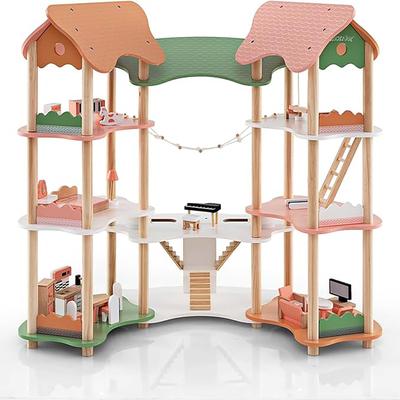
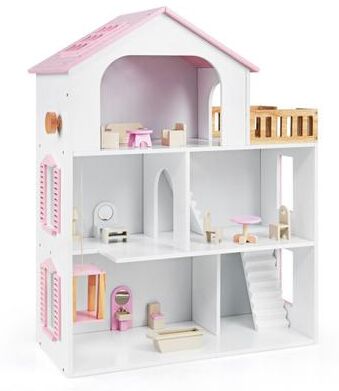
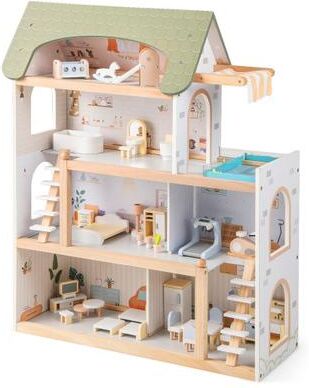
Kids Wooden Dollhouse Aged 3-8 w/ 32PCS Furniture AccessoriesGift your kids an enchanting world with our doll house! Featuring 3 tiers and 7 rooms, our doll house playset turns any nook of your child's room into a whimsical haven of delight.162,99 $*Shipping: 0,00 $Secure redirect to the provider
-
Bargoose Home Textiles, Inc. Jacquard Bedspread Collection by Bargoose Home Textiles - Made in PortugalThis richly textured, luxury woven Jacquard Design Bedspread from Bargoose Home Textiles adds a simple but elegant look to your bed. This Jacquard bedspread is lightweight, comfortable, and machine washable (a must for allergy sufferers).164,99 $*Shipping: 0,00 $Secure redirect to the provider
-
How do I calculate percentages of percentages?
To calculate percentages of percentages, you first convert the percentages into decimals by dividing by 100. Then, multiply the two percentages together to get the final percentage. For example, if you want to find 20% of 50%, you would first convert 20% to 0.20 and 50% to 0.50. Then, multiply 0.20 by 0.50 to get 0.10, which is 10% of the original value. **
-
Why are percentages reversible?
Percentages are reversible because they represent a proportional relationship between two quantities. For example, if 20% of a quantity is 40, then 40 is 20% of the quantity. This reversibility is a fundamental property of percentages and allows for easy conversion between percentages and their corresponding values. It also makes it possible to calculate the original quantity when given the percentage and the resulting value. **
-
How do you round percentages?
To round percentages, you can follow the standard rounding rules. If the digit to the right of the desired decimal place is 5 or greater, you round up. If the digit is 4 or lower, you round down. For example, if you have a percentage of 56.78% and you want to round it to the nearest whole number, you would look at the digit in the second decimal place (8) and round up to 57%. **
-
How can one simplify percentages?
One way to simplify percentages is to convert them into fractions or decimals. For example, 25% can be simplified to 1/4 or 0.25. Another way is to use basic math operations such as multiplication and division. For instance, to find 20% of a number, you can multiply the number by 0.2. Lastly, it can be helpful to use common percentages as reference points, such as knowing that 50% is equal to half or 10% is equal to one-tenth. **
Similar search terms for Percentages
-
Bargoose Home Textiles, Inc. Jacquard Bedspread Collection by Bargoose Home Textiles - Made in PortugalThis richly textured, luxury woven Jacquard Design Bedspread from Bargoose Home Textiles adds a simple but elegant look to your bed. This Jacquard bedspread is lightweight, comfortable, and machine washable (a must for allergy sufferers).156,49 $*Shipping: 0,00 $Secure redirect to the provider
-
Bargoose Home Textiles, Inc. Jacquard Bedspread Collection by Bargoose Home Textiles - Made in PortugalThis richly textured, luxury woven Jacquard Design Bedspread from Bargoose Home Textiles adds a simple but elegant look to your bed. This Jacquard bedspread is lightweight, comfortable, and machine washable (a must for allergy sufferers).161,49 $*Shipping: 0,00 $Secure redirect to the provider
-
Bargoose Home Textiles, Inc. Jacquard Bedspread Collection by Bargoose Home Textiles - Made in PortugalThis richly textured, luxury woven Jacquard Design Bedspread from Bargoose Home Textiles adds a simple but elegant look to your bed. This Jacquard bedspread is lightweight, comfortable, and machine washable (a must for allergy sufferers).132,99 $*Shipping: 0,00 $Secure redirect to the provider
-
How do you calculate percentages?
To calculate percentages, you first need to determine the total value or amount you are working with. Then, you divide the part you are interested in by the total value. Finally, multiply the result by 100 to get the percentage. For example, if you want to find out what percentage 25 is of 100, you would divide 25 by 100 (0.25) and then multiply by 100 to get 25%. **
-
Does Excel calculate percentages incorrectly?
Excel does not calculate percentages incorrectly. However, sometimes users may encounter issues with percentage calculations if the data is not formatted correctly or if there are errors in the formulas. It is important to ensure that the data is entered accurately and that the formulas are set up correctly to get accurate percentage calculations in Excel. **
-
How do I calculate percentages?
To calculate a percentage, you first need to determine the total value of the data set you are working with. Then, you divide the specific value you are interested in by the total value and multiply by 100. This will give you the percentage of the specific value in relation to the total value. For example, if you have 20 apples out of a total of 100 fruits, the percentage of apples would be (20/100) * 100 = 20%. **
-
How do you increase percentages?
To increase a percentage, you can multiply the original percentage by a factor greater than 1. For example, if you want to increase a percentage by 20%, you would multiply the original percentage by 1.20. This will give you the new, increased percentage. Alternatively, you can add the percentage increase to 100% to find the new total percentage. For example, if you want to increase a percentage by 20%, you would add 20% to 100% to get 120%. **
* All prices are inclusive of VAT and, if applicable, plus shipping costs. The offer information is based on the details provided by the respective shop and is updated through automated processes. Real-time updates do not occur, so deviations can occur in individual cases. ** Note: Parts of this content were created by AI.