Buy loir-et-berce.eu ?
We are moving the project
loir-et-berce.eu .
Are you interested in purchasing the domain
loir-et-berce.eu ?
domain@kv-gmbh.de · 0541-91531010
Buy loir-et-berce.eu ?
What is the difference between rainfed agriculture and irrigated agriculture?
Rainfed agriculture relies on natural rainfall for watering crops, while irrigated agriculture involves the artificial application of water to the soil. Rainfed agriculture is more dependent on the timing and amount of rainfall, which can be unpredictable and may lead to crop failures during dry periods. In contrast, irrigated agriculture allows for more control over the water supply, which can result in more consistent and reliable crop production. However, irrigated agriculture requires access to water sources and infrastructure for water distribution, which may not be available in all regions. **
Why is agriculture dangerous?
Agriculture can be dangerous due to the use of heavy machinery and equipment, exposure to harmful chemicals such as pesticides and fertilizers, and working in extreme weather conditions. Additionally, working with livestock can pose risks of injury from kicks, bites, or trampling. The physical demands of agricultural work can also lead to musculoskeletal injuries and long-term health issues. **


Similar search terms for Agriculture
Top-Angebote
Products related to Agriculture:




-
What is conventional agriculture?
Conventional agriculture refers to the traditional method of farming that relies heavily on synthetic fertilizers, pesticides, and herbicides to maximize crop yields. It often involves monoculture, where a single crop is grown on a large scale, and mechanized farming practices. While conventional agriculture has helped increase food production to meet the demands of a growing population, it has also been criticized for its negative impacts on the environment, such as soil degradation, water pollution, and loss of biodiversity. **
-
What is political agriculture?
Political agriculture refers to the intersection of agriculture and political systems, policies, and ideologies. It encompasses the ways in which governments, political parties, and other stakeholders shape and influence agricultural practices, production, and distribution. This can include policies related to land use, subsidies, trade agreements, and environmental regulations, as well as the political power dynamics that impact the agricultural industry. Political agriculture also encompasses the social and economic implications of these policies on farmers, rural communities, and food systems. **
-
Should agriculture be completely nationalized?
Completely nationalizing agriculture may not be the best approach as it could stifle innovation and efficiency. A balance between private and public ownership allows for competition and diversity in the agricultural sector, leading to better products and practices. However, some level of government involvement is important to ensure food security, fair labor practices, and environmental sustainability. Therefore, a mixed approach that combines private enterprise with government oversight may be more effective in promoting a healthy and sustainable agricultural industry. **
-
What is done in agriculture?
In agriculture, various activities are carried out to produce food, fiber, and other products. This includes preparing the soil for planting, sowing seeds or planting seedlings, applying fertilizers and pesticides to promote plant growth and protect against pests and diseases, irrigating the crops, and harvesting the mature crops. Additionally, farmers also engage in activities such as animal husbandry, managing livestock, and maintaining the overall health and productivity of the farm. Overall, agriculture involves a range of tasks aimed at cultivating and producing crops and livestock for human consumption and use. **

Love or Agriculture - an Ultimatum?
Love and agriculture do not have to be mutually exclusive. It is possible to find a balance between pursuing a career in agriculture and maintaining a loving relationship. Communication, understanding, and compromise are key in navigating any potential conflicts that may arise. Ultimately, it is important to prioritize what brings fulfillment and happiness in both aspects of life. **
What is grafting in agriculture?
Grafting in agriculture is a technique where tissues from one plant are inserted into another plant in such a way that they grow together and eventually become one plant. This process is commonly used to combine the desirable traits of two different plants, such as disease resistance or improved fruit quality. Grafting is a common practice in fruit tree cultivation, allowing farmers to produce trees that bear multiple varieties of fruit on the same tree. **
Top-Angebote
Products related to Agriculture:
-
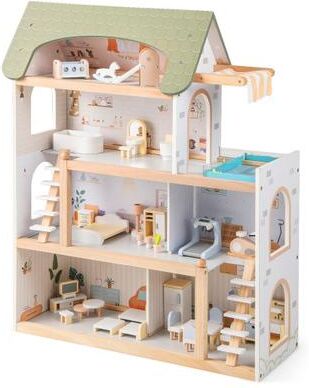
Kids Wooden Dollhouse Aged 3-8 w/ 32PCS Furniture AccessoriesGift your kids an enchanting world with our doll house! Featuring 3 tiers and 7 rooms, our doll house playset turns any nook of your child's room into a whimsical haven of delight.162,99 $*Shipping: 0,00 $Secure redirect to the provider
-
Epson EcoTank ET-2912Save up to 95% on the cost of ink* with an EcoTank ink tank printerSave up to 95% on printing costs* with Epson’s cartridge-free EcoTank printers. With up to 3 years of ink included*, the integrated ink tanks are easy to fill thanks to the specially engineered ink bottles. With an ultra-compact design and flexible, reliable connectivity features, this is the perfect printer for anyone looking for consistent high-quality prints at an incredibly low cost-per-page.Say goodbye to cartridgesEcoTank provides hassle-free home printing - the ultra-high capacity ink tanks allow mess-free refills and the key-lock bottles are designed so only the correct colour can be inserted. The front ink level display means it's easy to see when it’s finally due for a refill.Keep on savingThis economical printer saves you up to 95% on printing costs* and comes with up to 3 years' worth of ink*. One set of ink bottles delivers up to 4,700 pages in black and white and 7,500 in colour*, the equivalent of up to 63 cartridges worth of ink!*Small yet packed with featuresFeaturing a 100-sheet rear paper tray, borderless photo printing (up to 10x15cm) and fast print speeds of up to 11 pages per minute*, you can speed through a variety of tasks with ease. Additional benefits include Apple AirPrint compatibility and an intelligent print quality adjustment function that helps deliver consistent, high‐quality results.Built to lastHeat-Free Printing Technology means the printhead will last the lifetime of the printer* so you can benefit from no unnecessary replacement parts, as well as reduced power consumption compared to laser printers*. Engineered to prevent nozzle clogging, this highly durable printer comes with a 50,000 page (or 1 year) standard warranty*.Modern flexibilityFeaturing an ultra-compact design and Wi-Fi and Wi-Fi Direct connectivity, you can easily integrate this mutlifunction printer with your existing home set-up and print from mobiles, tablets and laptops*. With enhanced support for mesh Wi-Fi networks, the printer's Wi‐Fi is optimised to deliver a reliable and stable connection for a stress-free printing experience.Epson Smart Panel appThis app enables you to control your printer from your smart device*. You can print, copy and scan documents and photos, set up, monitor and troubleshoot your printer, all from your phone or tablet.228,49 £*Shipping: 0,00 £Secure redirect to the provider
-
What is the difference between rainfed agriculture and irrigated agriculture?
Rainfed agriculture relies on natural rainfall for watering crops, while irrigated agriculture involves the artificial application of water to the soil. Rainfed agriculture is more dependent on the timing and amount of rainfall, which can be unpredictable and may lead to crop failures during dry periods. In contrast, irrigated agriculture allows for more control over the water supply, which can result in more consistent and reliable crop production. However, irrigated agriculture requires access to water sources and infrastructure for water distribution, which may not be available in all regions. **
-
Why is agriculture dangerous?
Agriculture can be dangerous due to the use of heavy machinery and equipment, exposure to harmful chemicals such as pesticides and fertilizers, and working in extreme weather conditions. Additionally, working with livestock can pose risks of injury from kicks, bites, or trampling. The physical demands of agricultural work can also lead to musculoskeletal injuries and long-term health issues. **
-
What is conventional agriculture?
Conventional agriculture refers to the traditional method of farming that relies heavily on synthetic fertilizers, pesticides, and herbicides to maximize crop yields. It often involves monoculture, where a single crop is grown on a large scale, and mechanized farming practices. While conventional agriculture has helped increase food production to meet the demands of a growing population, it has also been criticized for its negative impacts on the environment, such as soil degradation, water pollution, and loss of biodiversity. **
-
What is political agriculture?
Political agriculture refers to the intersection of agriculture and political systems, policies, and ideologies. It encompasses the ways in which governments, political parties, and other stakeholders shape and influence agricultural practices, production, and distribution. This can include policies related to land use, subsidies, trade agreements, and environmental regulations, as well as the political power dynamics that impact the agricultural industry. Political agriculture also encompasses the social and economic implications of these policies on farmers, rural communities, and food systems. **
Similar search terms for Agriculture
-
Should agriculture be completely nationalized?
Completely nationalizing agriculture may not be the best approach as it could stifle innovation and efficiency. A balance between private and public ownership allows for competition and diversity in the agricultural sector, leading to better products and practices. However, some level of government involvement is important to ensure food security, fair labor practices, and environmental sustainability. Therefore, a mixed approach that combines private enterprise with government oversight may be more effective in promoting a healthy and sustainable agricultural industry. **
-
What is done in agriculture?
In agriculture, various activities are carried out to produce food, fiber, and other products. This includes preparing the soil for planting, sowing seeds or planting seedlings, applying fertilizers and pesticides to promote plant growth and protect against pests and diseases, irrigating the crops, and harvesting the mature crops. Additionally, farmers also engage in activities such as animal husbandry, managing livestock, and maintaining the overall health and productivity of the farm. Overall, agriculture involves a range of tasks aimed at cultivating and producing crops and livestock for human consumption and use. **
-
Love or Agriculture - an Ultimatum?
Love and agriculture do not have to be mutually exclusive. It is possible to find a balance between pursuing a career in agriculture and maintaining a loving relationship. Communication, understanding, and compromise are key in navigating any potential conflicts that may arise. Ultimately, it is important to prioritize what brings fulfillment and happiness in both aspects of life. **
-
What is grafting in agriculture?
Grafting in agriculture is a technique where tissues from one plant are inserted into another plant in such a way that they grow together and eventually become one plant. This process is commonly used to combine the desirable traits of two different plants, such as disease resistance or improved fruit quality. Grafting is a common practice in fruit tree cultivation, allowing farmers to produce trees that bear multiple varieties of fruit on the same tree. **
* All prices are inclusive of VAT and, if applicable, plus shipping costs. The offer information is based on the details provided by the respective shop and is updated through automated processes. Real-time updates do not occur, so deviations can occur in individual cases. ** Note: Parts of this content were created by AI.