Buy loir-et-berce.eu ?
We are moving the project
loir-et-berce.eu .
Are you interested in purchasing the domain
loir-et-berce.eu ?
domain@kv-gmbh.de · 0541-91531010
Buy loir-et-berce.eu ?
How does a single-celled organism become a multicellular organism?
A single-celled organism can become a multicellular organism through a process called cell division and specialization. Initially, the single cell undergoes multiple rounds of cell division, resulting in a cluster of cells. These cells then start to differentiate and specialize in their functions, forming different types of tissues and organs. Through further cell division, specialization, and coordination, these cells organize themselves into a complex multicellular organism with various cell types working together to perform specific functions. This process is known as cellular differentiation and is essential for the development of multicellular organisms. **
How did the unicellular organism evolve into a multicellular organism?
The evolution of unicellular organisms into multicellular organisms is believed to have occurred through a process called coloniality. Initially, unicellular organisms formed colonies where individual cells worked together for survival. Over time, some cells within these colonies specialized in specific functions, leading to the development of multicellular organisms with different cell types. This specialization allowed for more complex structures and functions, ultimately leading to the evolution of multicellular organisms. **

Similar search terms for Organism
Top-Angebote
Products related to Organism:




-
How can a single-celled organism become a multicellular organism?
A single-celled organism can become a multicellular organism through a process called cell aggregation. This occurs when individual cells come together and adhere to each other, forming a multicellular structure. Over time, these cells differentiate and specialize to perform specific functions within the organism, leading to the development of tissues and organs. This process allows the single-celled organism to evolve into a complex, multicellular organism with a higher level of organization and specialization. **
-
How did the single-celled organism develop into a multicellular organism?
The transition from single-celled to multicellular organisms is thought to have occurred through a process called coloniality, where individual cells began to work together and specialize in different functions. This allowed for more efficient resource utilization and increased the organism's ability to adapt to different environments. Over time, these specialized cells became more integrated and developed into the complex multicellular organisms we see today. This transition likely occurred independently in different lineages of organisms, leading to the diverse array of multicellular life forms we see today. **
-
Can viruses transform an entire organism into another similar and permanently viable organism?
No, viruses cannot transform an entire organism into another similar and permanently viable organism. Viruses are not capable of causing such a drastic and complex transformation in an organism. While viruses can cause changes in the host organism's cells and genetic material, they do not have the ability to completely transform one organism into another. The concept of a virus causing such a transformation is more characteristic of science fiction rather than actual scientific understanding of virology. **
-
Is the blastocyst an organism?
Yes, the blastocyst is considered an organism. It is the stage of development of a fertilized egg before it implants into the uterus. At this stage, the blastocyst is a multicellular structure with specialized cells that will eventually develop into the fetus and placenta. Therefore, the blastocyst can be considered an early stage of an organism's development. **

Is cress a living organism?
Yes, cress is a living organism. It is a type of plant that belongs to the mustard family and is commonly grown for its edible leaves. Like all plants, cress is a living organism that undergoes processes such as photosynthesis, respiration, and growth. It requires water, sunlight, and nutrients to survive and thrive. **
Is yeast a living organism?
Yes, yeast is a living organism. It is a type of fungus that belongs to the kingdom Fungi. Yeast cells are single-celled organisms that can reproduce asexually through budding. They are capable of metabolizing sugars and producing carbon dioxide and alcohol through the process of fermentation. Yeast is commonly used in baking and brewing due to its ability to ferment sugars and produce carbon dioxide, which causes dough to rise and gives beer and wine their alcoholic content. **
Top-Angebote
Products related to Organism:
-
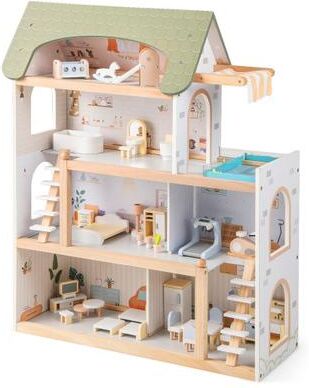
Kids Wooden Dollhouse Aged 3-8 w/ 32PCS Furniture AccessoriesGift your kids an enchanting world with our doll house! Featuring 3 tiers and 7 rooms, our doll house playset turns any nook of your child's room into a whimsical haven of delight.162,99 $*Shipping: 0,00 $Secure redirect to the provider
-
Epson EcoTank ET-2912Save up to 95% on the cost of ink* with an EcoTank ink tank printerSave up to 95% on printing costs* with Epson’s cartridge-free EcoTank printers. With up to 3 years of ink included*, the integrated ink tanks are easy to fill thanks to the specially engineered ink bottles. With an ultra-compact design and flexible, reliable connectivity features, this is the perfect printer for anyone looking for consistent high-quality prints at an incredibly low cost-per-page.Say goodbye to cartridgesEcoTank provides hassle-free home printing - the ultra-high capacity ink tanks allow mess-free refills and the key-lock bottles are designed so only the correct colour can be inserted. The front ink level display means it's easy to see when it’s finally due for a refill.Keep on savingThis economical printer saves you up to 95% on printing costs* and comes with up to 3 years' worth of ink*. One set of ink bottles delivers up to 4,700 pages in black and white and 7,500 in colour*, the equivalent of up to 63 cartridges worth of ink!*Small yet packed with featuresFeaturing a 100-sheet rear paper tray, borderless photo printing (up to 10x15cm) and fast print speeds of up to 11 pages per minute*, you can speed through a variety of tasks with ease. Additional benefits include Apple AirPrint compatibility and an intelligent print quality adjustment function that helps deliver consistent, high‐quality results.Built to lastHeat-Free Printing Technology means the printhead will last the lifetime of the printer* so you can benefit from no unnecessary replacement parts, as well as reduced power consumption compared to laser printers*. Engineered to prevent nozzle clogging, this highly durable printer comes with a 50,000 page (or 1 year) standard warranty*.Modern flexibilityFeaturing an ultra-compact design and Wi-Fi and Wi-Fi Direct connectivity, you can easily integrate this mutlifunction printer with your existing home set-up and print from mobiles, tablets and laptops*. With enhanced support for mesh Wi-Fi networks, the printer's Wi‐Fi is optimised to deliver a reliable and stable connection for a stress-free printing experience.Epson Smart Panel appThis app enables you to control your printer from your smart device*. You can print, copy and scan documents and photos, set up, monitor and troubleshoot your printer, all from your phone or tablet.228,49 £*Shipping: 0,00 £Secure redirect to the provider
-
How does a single-celled organism become a multicellular organism?
A single-celled organism can become a multicellular organism through a process called cell division and specialization. Initially, the single cell undergoes multiple rounds of cell division, resulting in a cluster of cells. These cells then start to differentiate and specialize in their functions, forming different types of tissues and organs. Through further cell division, specialization, and coordination, these cells organize themselves into a complex multicellular organism with various cell types working together to perform specific functions. This process is known as cellular differentiation and is essential for the development of multicellular organisms. **
-
How did the unicellular organism evolve into a multicellular organism?
The evolution of unicellular organisms into multicellular organisms is believed to have occurred through a process called coloniality. Initially, unicellular organisms formed colonies where individual cells worked together for survival. Over time, some cells within these colonies specialized in specific functions, leading to the development of multicellular organisms with different cell types. This specialization allowed for more complex structures and functions, ultimately leading to the evolution of multicellular organisms. **
-
How can a single-celled organism become a multicellular organism?
A single-celled organism can become a multicellular organism through a process called cell aggregation. This occurs when individual cells come together and adhere to each other, forming a multicellular structure. Over time, these cells differentiate and specialize to perform specific functions within the organism, leading to the development of tissues and organs. This process allows the single-celled organism to evolve into a complex, multicellular organism with a higher level of organization and specialization. **
-
How did the single-celled organism develop into a multicellular organism?
The transition from single-celled to multicellular organisms is thought to have occurred through a process called coloniality, where individual cells began to work together and specialize in different functions. This allowed for more efficient resource utilization and increased the organism's ability to adapt to different environments. Over time, these specialized cells became more integrated and developed into the complex multicellular organisms we see today. This transition likely occurred independently in different lineages of organisms, leading to the diverse array of multicellular life forms we see today. **
Similar search terms for Organism
-
Can viruses transform an entire organism into another similar and permanently viable organism?
No, viruses cannot transform an entire organism into another similar and permanently viable organism. Viruses are not capable of causing such a drastic and complex transformation in an organism. While viruses can cause changes in the host organism's cells and genetic material, they do not have the ability to completely transform one organism into another. The concept of a virus causing such a transformation is more characteristic of science fiction rather than actual scientific understanding of virology. **
-
Is the blastocyst an organism?
Yes, the blastocyst is considered an organism. It is the stage of development of a fertilized egg before it implants into the uterus. At this stage, the blastocyst is a multicellular structure with specialized cells that will eventually develop into the fetus and placenta. Therefore, the blastocyst can be considered an early stage of an organism's development. **
-
Is cress a living organism?
Yes, cress is a living organism. It is a type of plant that belongs to the mustard family and is commonly grown for its edible leaves. Like all plants, cress is a living organism that undergoes processes such as photosynthesis, respiration, and growth. It requires water, sunlight, and nutrients to survive and thrive. **
-
Is yeast a living organism?
Yes, yeast is a living organism. It is a type of fungus that belongs to the kingdom Fungi. Yeast cells are single-celled organisms that can reproduce asexually through budding. They are capable of metabolizing sugars and producing carbon dioxide and alcohol through the process of fermentation. Yeast is commonly used in baking and brewing due to its ability to ferment sugars and produce carbon dioxide, which causes dough to rise and gives beer and wine their alcoholic content. **
* All prices are inclusive of VAT and, if applicable, plus shipping costs. The offer information is based on the details provided by the respective shop and is updated through automated processes. Real-time updates do not occur, so deviations can occur in individual cases. ** Note: Parts of this content were created by AI.